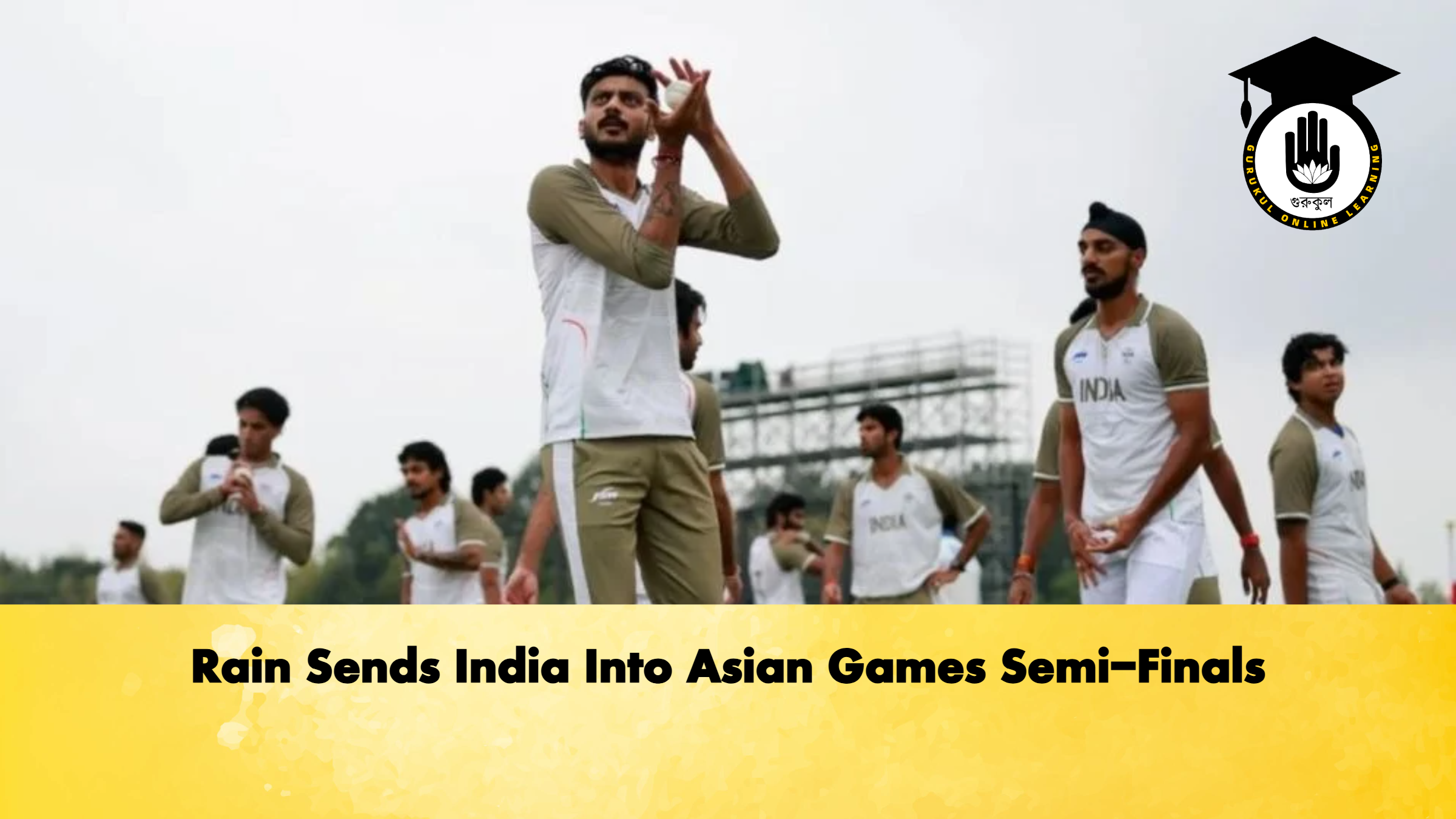
The match was scheduled for Monday at Korogi Sports Park, but the weather made any meaningful start impossible. Rain had been falling in the area since Sunday night, leaving the outfield heavily waterlogged. Conditions remained poor on Monday morning, with further showers preventing the ground from being prepared for play.
The situation was assessed by the match officials, who eventually called off the fixture before the scheduled start. There was no toss and neither side had the opportunity to bat or bowl.
Under the competition’s knockout rules, a quarter-final abandoned because of weather is decided in favour of the higher-ranked team. India entered the tournament as one of the leading seeds and were ranked above Afghanistan in the relevant T20I standings. That meant the defending champions progressed to the last four without taking the field, while Afghanistan’s campaign ended at the quarter-final stage.
The washout was not an isolated incident at the venue. Earlier on the same day, the first men’s quarter-final between Pakistan and Hong Kong was also abandoned because of rain. That match, too, ended without a toss, with Pakistan advancing under the same provision for the higher-ranked side.
India, Pakistan, Sri Lanka and Bangladesh had entered the tournament as the four leading seeded teams and were given direct entry into the quarter-finals. That arrangement has become significant in Nisshin because persistent rain has made it impossible for the knockout matches to be completed on the field.
The remaining quarter-finals are scheduled to feature Sri Lanka against Nepal and Bangladesh against Malaysia. Should either fixture also be abandoned because of weather, the higher-ranked seeded team would progress according to the tournament regulations. The outcomes of those matches will determine the other two semi-finalists.
India’s semi-final is scheduled for 1 October. The team will face the winner of the Sri Lanka-Nepal quarter-final.
For Afghanistan, the latest washout is a particularly frustrating repeat of their experience at the 2023 Asian Games in Hangzhou. They reached the final on that occasion and faced India for the gold medal. Afghanistan scored 112 for 5 from 18.2 overs before rain interrupted play. The match could not be resumed, and India were awarded the gold medal as the higher-ranked side, leaving Afghanistan with silver.
Three years later, Afghanistan have once again seen a major Asian Games knockout fixture against India decided by rain rather than cricket. This time, however, the setback came one round earlier, before they had the chance to compete for a place in the semi-finals.
The cancellation was also disappointing for supporters who had been waiting to see India’s emerging players in action. Particular attention had surrounded 15-year-old Vaibhav Suryavanshi, whose involvement had generated interest ahead of the fixture. With the match abandoned, spectators were denied the chance to see the youngster and the rest of India’s squad compete in a meaningful knockout contest.
Afghanistan’s disappointment was shared by the players. Mohammad Akram expressed his frustration at missing the opportunity to test themselves against India, with the weather ultimately bringing the contest to an end before it could begin.
For India, the circumstances are unusual. The defending champions have reached the semi-finals without playing a match in the knockout stage. Their route to the last four has been determined by the tournament’s seeding rules and the persistent rain in Nisshin.
The next fixture, therefore, will carry added significance. It will be India’s first opportunity in the knockout phase to settle matters on the field rather than through the regulations governing weather-affected matches.