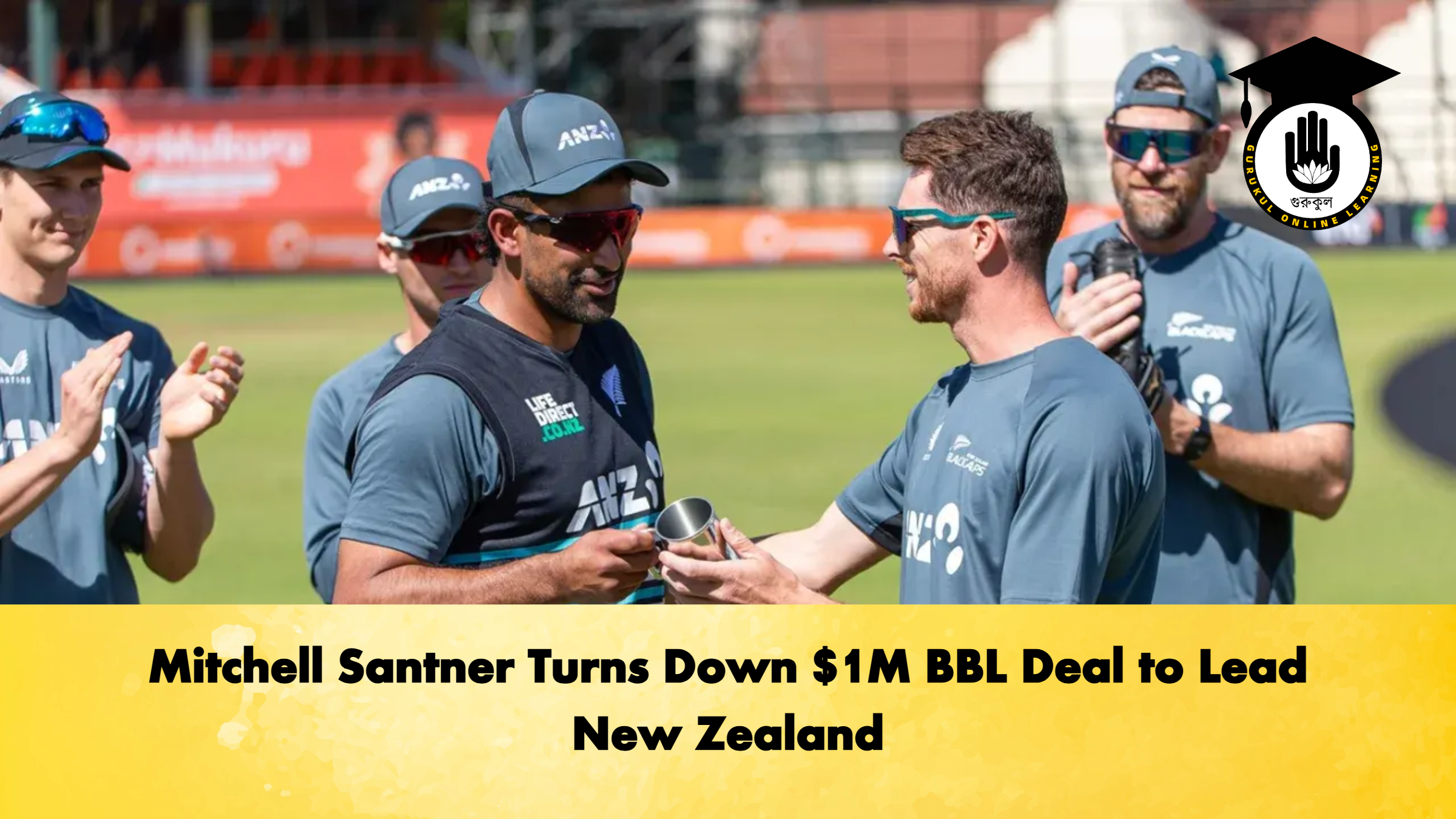
New Zealand’s white-ball captain Mitchell Santner has rejected a lucrative two-year contract worth nearly $1 million from Big Bash League franchise Adelaide Strikers, choosing instead to prioritize his international duties with the national side.
The 34-year-old left-arm spinner and handy lower-order batsman was offered the substantial sum to commit to the Australian franchise. However, Santner elected to put country before commercial gain. With a congested international schedule lying ahead, his refusal underlines a firm determination to anchor the Black Caps through an intense competitive cycle.
A packed home calendar proved decisive in his choice. New Zealand are set to host India in a multi-format series commencing on 22 October, followed closely by a high-stakes four-Test series against Australia. Santner is eager to maintain his national central contract, remain a key option in Test selection, and continue captaining the white-ball sides—especially with the upcoming T20 World Cup hosted on home soil featuring heavily in his long-term plans.
Head coach Rob Walter commended the skipper’s loyalty, characterizing the decision as an authentic reflection of Santner’s values and leadership ethos. Speaking to the New Zealand Herald, Walter expressed little surprise at the outcome:
“To me, this is the measure of a person’s character. It is not about judging anyone else, but in Mitch’s case, putting the team first simply highlights who he is as a leader. I know what captaining his country means to him, and he has a strong desire to be part of the upcoming Tests.”
Santner’s decision stands out against a broader structural shift within New Zealand Cricket. A growing list of senior players have relinquished national central contracts in favour of casual or flexible playing arrangements to capitalise on private T20 circuit contracts worldwide. High-profile figures including Finn Allen, Tim Seifert, Lockie Ferguson, Mark Chapman, and Adam Milne have embraced non-central terms, whilst Devon Conway similarly negotiated a flexible contract model to balance domestic representation with global opportunities.
Coach Walter views this dual reality pragmatically rather than negatively. He acknowledged that global demand for Kiwi cricketers reflects the high quality of the nation’s player pool. Nevertheless, he emphasised that maintaining a supportive team culture—one where representing New Zealand remains the pinnacle of a player’s career—is vital for keeping top