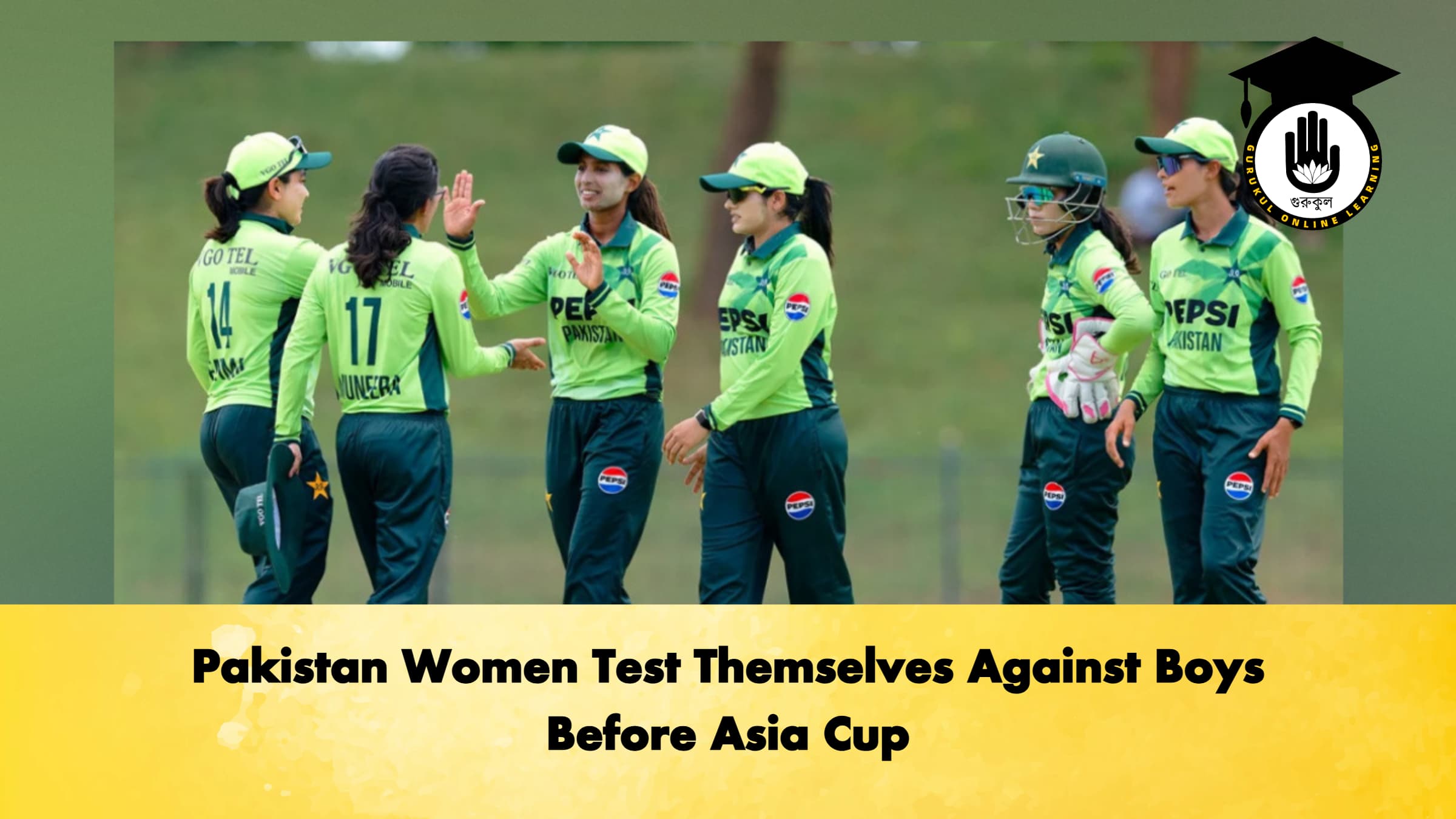
Pakistan’s women cricketers have taken an unconventional route in their preparations for the upcoming Women’s T20 Asia Cup, playing a series of competitive matches against a boys’ team in Lahore.
Captain Fatima Sana and her team faced boys from the Abdul Qadir Cricket Academy in 20-over matches at Lahore’s National Cricket Academy. The games were arranged to provide the Pakistan players with a demanding environment ahead of the continental tournament, where they will face a range of challenging opponents.
The approach mirrors a preparation method used by Bangladesh Women’s team ahead of the most recent Women’s ODI World Cup. Bangladesh had played matches against an Under-15 boys’ side as part of their preparations for the global tournament. Pakistan have now adopted a similar strategy, using matches against male players to test their skills and ability to cope with pressure before an important international competition.
For Fatima, the matches offered more than simply an opportunity to spend time in the middle. The Pakistan captain said the intensity of the games gave the players valuable experience of performing under pressure, something that could prove particularly useful during the Asia Cup.
“We had very good preparation for the tournament. We played several competitive matches against boys, where we were put under pressure. This experience and the lessons we learnt will help us adapt to the tough challenges of the competition,” Fatima said.
The preparation comes as Pakistan get ready for the Women’s T20 Asia Cup in the United Arab Emirates. The tournament is scheduled to begin in Dubai on 28 August and will run until 13 September, bringing together teams from across the continent for a major regional competition.
Pakistan have been placed in Group A alongside India, Thailand and Hong Kong. Their campaign will begin on 1 September against Thailand.
The group also means Pakistan are set to face India during the preliminary stage, adding further significance to their preparation. Matches against Thailand and Hong Kong will also be important as Pakistan seek to secure a strong position in the group and progress in the competition.
Playing against boys can expose players to a different level of pace, intensity and pressure, making such fixtures useful as preparation matches. For Pakistan, the immediate objective was to create competitive situations in which the players had to respond rather than simply work through routine training exercises.
The true value of those matches, however, will be measured when the team takes the field in the UAE. With the Asia Cup approaching, Fatima and her team will hope the experience gained in Lahore helps them deal with pressure and maintain their composure when the stakes are considerably higher.