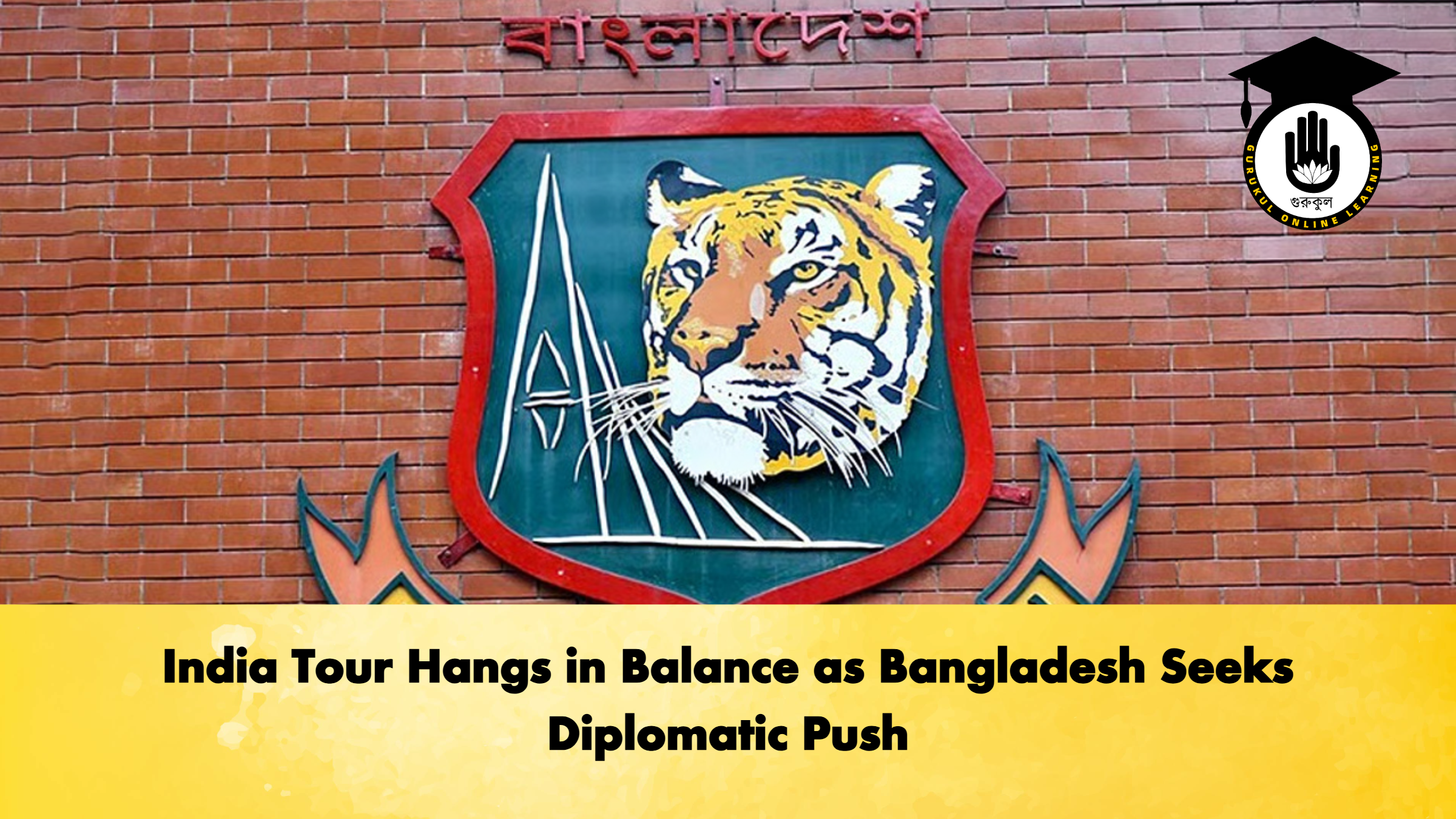
The Bangladesh Cricket Board (BCB) is turning to diplomatic engagement at government level in an effort to secure India’s scheduled tour of Bangladesh in September, with uncertainty continuing over whether the proposed bilateral series will go ahead.
The BCB remains hopeful that the tour, comprising three one-day internationals and three Twenty20 internationals, will be staged as planned. However, formal approval from the Board of Control for Cricket in India (BCCI) is yet to arrive, leaving the six-match white-ball series in a state of uncertainty as the proposed dates draw closer.
Against this backdrop, the BCB appears keen to supplement its cricketing discussions with government-to-government communication. According to a report by a cricket-focused news outlet, BCB president Tamim Iqbal and the chairman of the board’s security committee, Saiyed Ibrahim, met Foreign Affairs State Minister Shama Obaid Islam at her office on Thursday, 30 July.
People familiar with the matter were quoted as saying that the BCB officials requested increased formal communication with the relevant Indian authorities and sought a positive message regarding the proposed tour. The meeting suggests that the board sees diplomatic engagement as potentially important in resolving outstanding issues surrounding the series.
Tamim confirmed that the meeting had taken place but did not disclose details of the discussions. The timing of the meeting, however, is significant. It came just one day after the BCB president expressed optimism that the India series could be held, while also indicating that some of the factors determining the tour were beyond the board’s direct control.
Under the proposed itinerary, India are expected to play three ODIs and three T20Is in Bangladesh in September. A series of this scale would carry considerable sporting and commercial significance for both sides. It would also provide an opportunity to revive regular bilateral cricket between the two neighbours after a period in which scheduling and wider circumstances have complicated their cricketing engagements.
The proposed tour has been viewed against the backdrop of broader political and diplomatic developments between Bangladesh and India. Plans for bilateral cricket have previously faced disruption amid political instability and administrative complications. As a result, the organisation of the series has increasingly become intertwined with considerations beyond the cricket boards themselves.
The relationship between the two countries has also experienced periods of strain in recent years, with political developments influencing sporting ties. Bilateral cricket, particularly when it involves an Indian tour, often attracts considerable public and commercial attention in Bangladesh. Any delay or cancellation could therefore have implications not only for the cricketing calendar but also for the broader sporting relationship between the two countries.
At the same time, there have been indications of efforts to improve relations between Dhaka and New Delhi. The report noted that India had invited Bangladesh Prime Minister Tarique Rahman as a special guest to the 18th BRICS Summit scheduled for September. Foreign Affairs Adviser Dr Khalilur Rahman also reportedly said on 29 July that Bangladesh and India had agreed to move their bilateral relationship forward on the basis of mutual interests and sovereign equality.
Such diplomatic developments could create a more favourable environment for sporting cooperation. Although bilateral cricket is primarily managed by the respective cricket boards, factors such as security arrangements, travel, administrative coordination and the wider political climate can all influence the feasibility of an international tour.
The BCB’s recent approach suggests that its new board is keen to restore greater stability to cricketing relations between the two countries. Seeking government-level support appears to be part of that broader effort. If the Indian team does travel to Bangladesh in September, the series could serve not only as a major sporting contest but also as a signal of renewed engagement between the cricketing establishments of the two countries.
For now, however, the decisive factor remains the BCCI’s formal position. The BCB has made clear that it wants the tour to proceed and is seeking support beyond the cricket administration to help achieve that objective.
The coming weeks are therefore likely to be crucial. Diplomatic engagement, communication between the two cricket boards and the overall trajectory of Bangladesh-India relations will all play a role in determining whether the planned six-match series finally takes place. Until the Indian board provides formal confirmation, the September tour will remain subject to uncertainty.