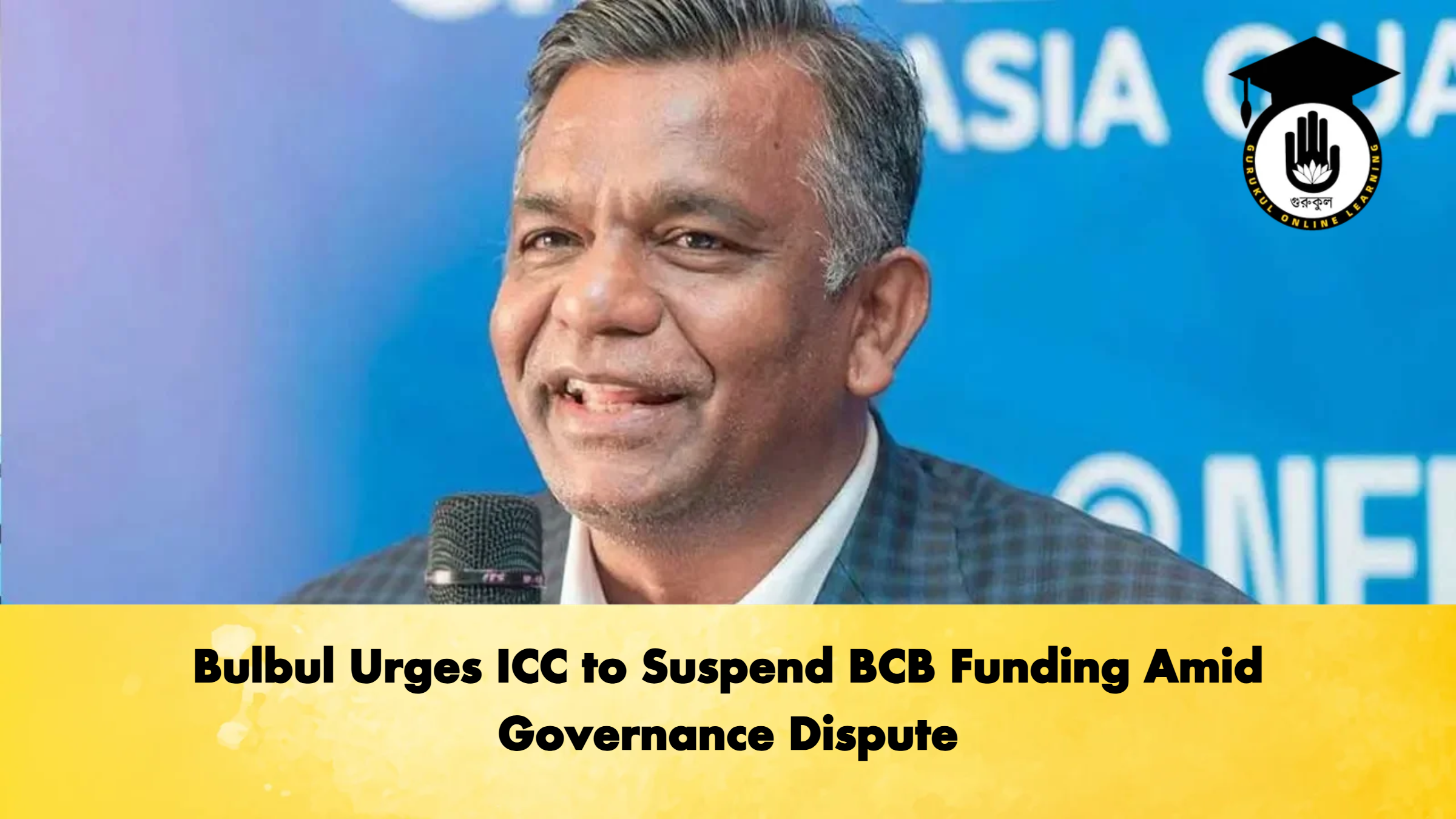
Bulbul Urges ICC to Suspend BCB Funding Amid Governance Dispute
The administrative turmoil surrounding the Bangladesh Cricket Board (BCB) has now reached the international stage, with former BCB president Aminul Islam Bulbul formally challenging the legitimacy of the board’s current leadership in a detailed submission to the International Cricket Council (ICC). In a 14-page letter, Bulbul has questioned the legality of the process through which he was removed from office and has urged the ICC to temporarily withhold financial assistance to the BCB until the dispute is resolved.
According to cricket news outlet Cricbuzz, the letter was sent earlier this week and outlines Bulbul’s objections to both his dismissal and the subsequent formation of a new BCB administration. He argues that the decisions taken by the relevant authorities lacked a proper legal and administrative foundation and has called for his reinstatement as president of the Bangladesh Cricket Board. Pending a final resolution, he has also requested that the ICC suspend all funding to the board.
The report states that after receiving the correspondence, the ICC informed the Bangladesh Cricket Board of its contents and sought the board’s response. The BCB subsequently consulted its legal advisers before submitting an official reply to the ICC. The contents of that response, however, have not been made public.
Cricbuzz also reported that repeated attempts were made to contact Bulbul for comment. He neither answered telephone calls nor responded to messages, leaving the allegations contained in the letter without any additional public explanation from his side.
The dispute stems from a prolonged administrative conflict that has unfolded over recent months. On 7 April, the National Sports Council dissolved the BCB board led by Aminul Islam, citing recommendations made by an investigative committee established to examine allegations of irregularities in the board’s previous election. On the same day, an 11-member interim committee headed by former Bangladesh captain Tamim Iqbal was appointed and tasked with organising fresh elections within 90 days.
Those elections were held on 7 June, with Tamim Iqbal elected unopposed as BCB president for a four-year term. Bulbul, however, maintains that the entire process was legally flawed and that his removal from office failed to comply with the applicable rules and governance procedures.
The origins of the controversy date back even further. Allegations of electoral irregularities within the BCB prompted growing calls for an independent investigation. A group led by Tamim Iqbal claimed that 50 of Dhaka’s 76 cricket clubs supported an inquiry into the conduct of the previous election. Acting on those concerns, the National Sports Council established an investigation committee whose recommendations ultimately led to the dissolution of the Bulbul-led board.
Aminul Islam assumed the BCB presidency on 30 May 2025 after the National Sports Council removed Faruque Ahmed from his position as councillor, a decision that also resulted in the end of his tenure as board president. Faruque had himself succeeded long-serving president Nazmul Hassan in August 2024.
Before taking charge of the BCB, Bulbul had been serving as an ICC Development Officer. He returned to Bangladesh with the stated objective of helping oversee reforms and ensuring a transparent and credible election process within the country’s cricket administration. Although the original expectation was that he would return to his ICC role after the election, Bulbul later decided to contest the presidency himself, arguing that ongoing reforms required continuity. That plan came to an abrupt end following the National Sports Council’s decision to dissolve his board.
The financial dimension of the dispute could prove significant. ICC funding represents a vital source of income for the Bangladesh Cricket Board, supporting a broad range of cricketing activities. These include day-to-day operations, infrastructure development, youth and age-group programmes, women’s cricket, coaching and education initiatives, grassroots development projects, and the organisation of international fixtures. Any interruption to that funding could have consequences across multiple levels of Bangladesh’s cricket structure, particularly in long-term development programmes.
At present, the ICC has not issued any official statement or announced any decision regarding Bulbul’s request. Likewise, the Bangladesh Cricket Board has yet to disclose the substance of its legal response beyond confirming that it has replied. As a result, the matter remains unresolved, with the next steps likely to depend on the ICC’s assessment of the legal arguments presented by both sides and any further developments in the governance dispute.