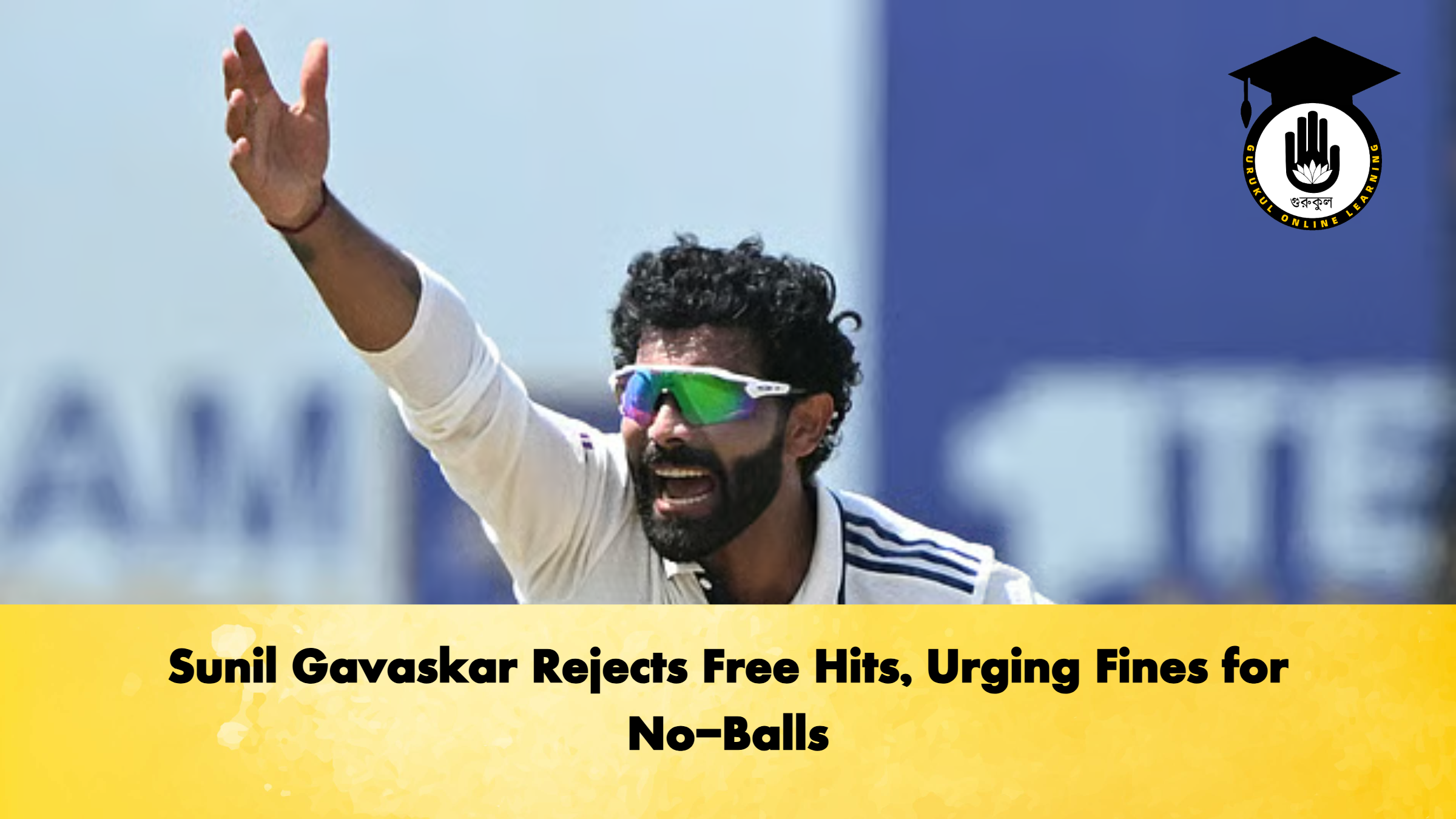
The persistent issue of overstepping in Test cricket has sparked a robust debate within Indian cricketing circles, prompting legendary former captain Sunil Gavaskar to firmly reject suggestions of introducing free hits. Instead, he has advocated for a system of escalating financial penalties that would target not only the offending bowlers but also the team’s coaching staff.
This intervention follows a concerning surge in illegal deliveries during India’s recent two-match Test series against Sri Lanka. The problem was particularly pronounced among the slow bowlers, with spinner Ravindra Jadeja and debutant Saransh Jain repeatedly transgressing the popping crease. During the second Test alone, Indian bowlers conceded 13 no-balls, with Jadeja and Jain accounting for 11 of those infractions across both innings.
Jadeja’s struggles with his run-up are not an isolated anomaly. Since 2021, the experienced left-arm spinner has amassed 88 no-balls in Test matches—a statistic that dwarfs his international peers. To put this into perspective, Pakistan’s Noman Ali sits second among spinners over the same period with 40 no-balls, followed by Sri Lanka’s Lasith Embuldeniya with 33 and England’s Jack Leach with 19.
Reflecting on these mounting extras, India’s spin bowling coach Sairaj Bahutule recently proposed adopting the limited-overs convention of awarding a free hit following a no-ball. Gavaskar dismissed the notion outright in his regular newspaper column. He argued that granting batsmen a reprieve would unduly tilt the balance in their favour, pointing out that contemporary Test cricket already features regulations that heavily favour run-scoring, such as strict limits on bouncers per over and increasingly compact boundary ropes. A no-ball in a Test can prove catastrophic if a batsman is caught off the delivery, only for the subsequent reprieve to alter the match’s trajectory entirely.
Rather than rewarding the batsman with a free hit, Gavaskar believes accountability must be enforced directly through the pocket. He suggested a progressive financial penalty system where the fine doubles with each subsequent infraction by the same bowler. Crucially, the bowling coach would also shoulder half of the monetary sanction, thereby encouraging a stricter technical oversight during practice sessions. As a light-hearted yet purposeful twist, the accumulated fines could then be pooled to fund a farewell dinner for the squad at the conclusion of a tour.
Beyond overstepping, Gavaskar proposed expanding this internal accountability framework to other fundamental lapses, such as failing to provide adequate backing-up during fielding drills. He suggested that the specific list of punishable offences and the structure of the fines could be democratically decided by the dressing room via a team vote, ensuring collective buy-in for heightened discipline on the field.
Ultimately, addressing the root causes of overstepping requires meticulous attention to a bowler’s run-up length, foot placement at the crease, and psychological composure under match pressure. Whether cricket authorities entertain Gavaskar’s unorthodox punitive measures or stick to traditional warnings, the discussion has foregrounded the urgent need for elite bowlers to eradicate preventable extras from the longest format of the game.