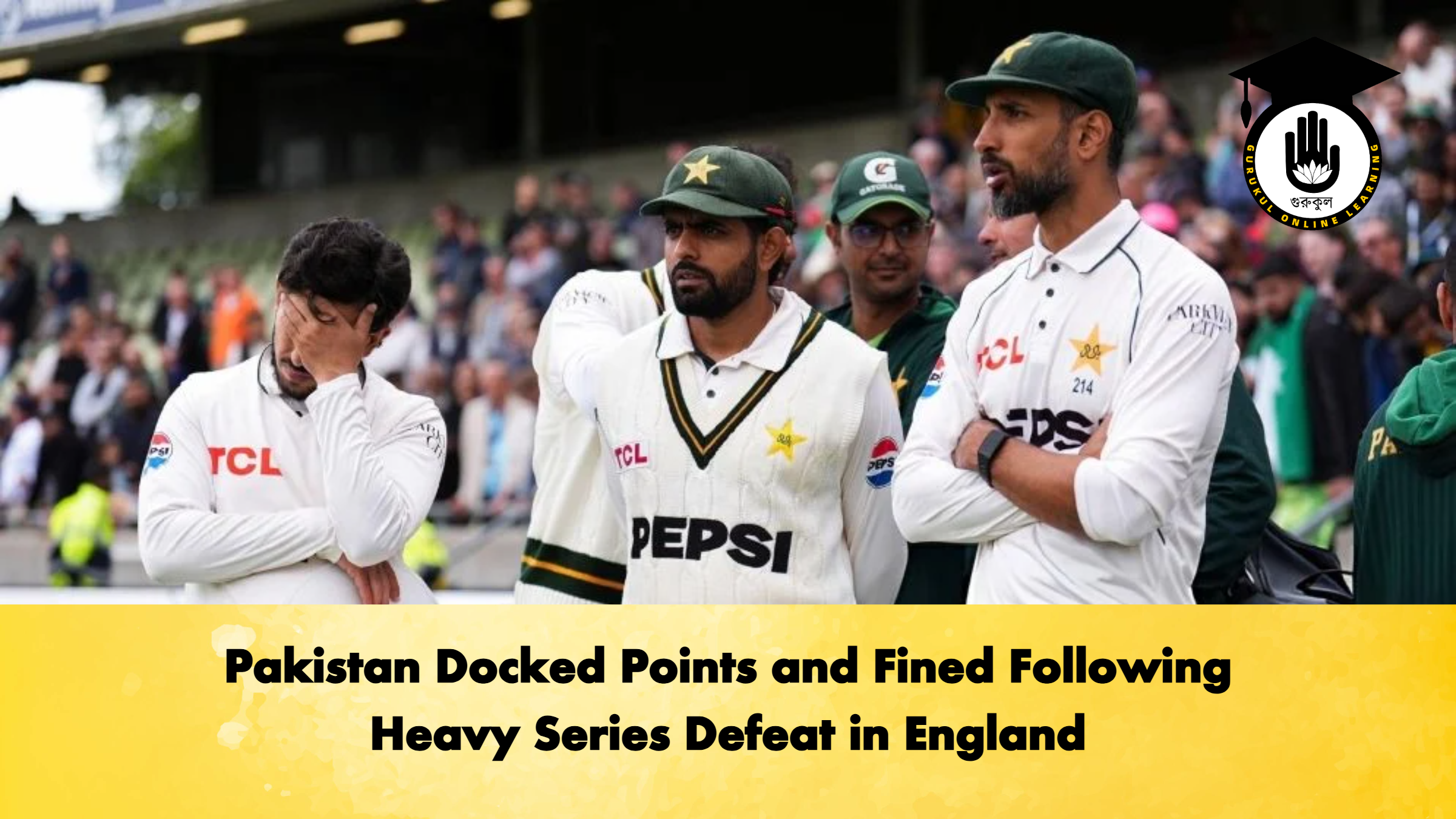
Pakistan’s bruising tour of England has ended in double misery after the International Cricket Council (ICC) imposed heavy financial and sporting sanctions on the visiting team following the third and final Test match at Edgbaston. Alongside suffering a comprehensive 3–0 series whitewash, the team was penalised for a severe slow over-rate during the final fixture, compounding their difficulties in the current World Test Championship (WTC) cycle.
The disciplinary action was initiated by on-field umpires Paul Reiffel and Chris Gaffaney, alongside third umpire Allahudien Paleker and fourth umpire Russel Warren, who officially reported the violation. Following a comprehensive review of the time allowances and ground conditions, Ranjan Madugalle of the Emirates ICC Elite Panel of Match Referees confirmed that Pakistan had fallen 11 overs short of their target within the allocated timeframe.
The match itself ended in an eight-wicket victory for England, securing a clean sweep of the series. However, the operational shortfall off the pitch proved equally costly for the visitors. Under Article 2.22 of the ICC Code of Conduct for Players and Player Support Personnel, players are docked five per cent of their match fee for every over their side fails to bowl in the allotted time, subject to a maximum limit of 50 per cent. Because the shortfall spanned 11 overs, the penalty naturally reached the maximum threshold, resulting in the entire Pakistani squad losing half of their appearance fees for the match.
The sporting consequences carry far greater strategic damage for the national team’s long-term standing. In accordance with Article 16.11.2 of the ICC World Test Championship Playing Conditions, teams forfeit one competition point for each slow over. The deduction of 11 WTC points leaves Pakistan stranded at the bottom of the standings in ninth place, holding a point percentage of just 4.63 per cent.
Sluggish over-rates remain a persistent challenge in multi-day international cricket. Tactics such as frequent field alterations, prolonged consultations between bowlers and captains, and mid-over adjustments routinely push innings beyond their allocated schedules. In response, cricket’s governing body has significantly tightened its stance, recognising that prolonged delays not only disrupt the spectator experience but also undermine the parity of league-based international competitions. In modern Test cricket, where overall points percentage determines who advances to the championship final, unforced regulatory penalties can ruin a country’s qualification prospects.
Pakistan will now need to regroup before their next scheduled assignment in the competition. The national team will return to home soil this coming November to host Asian rivals Sri Lanka in a two-match Test series in Rawalpindi and Lahore. If Pakistan hope to reignite their campaign and climb the table, securing victory on home turf will be vital—as will maintaining strict over-rate discipline to prevent further administrative setbacks.