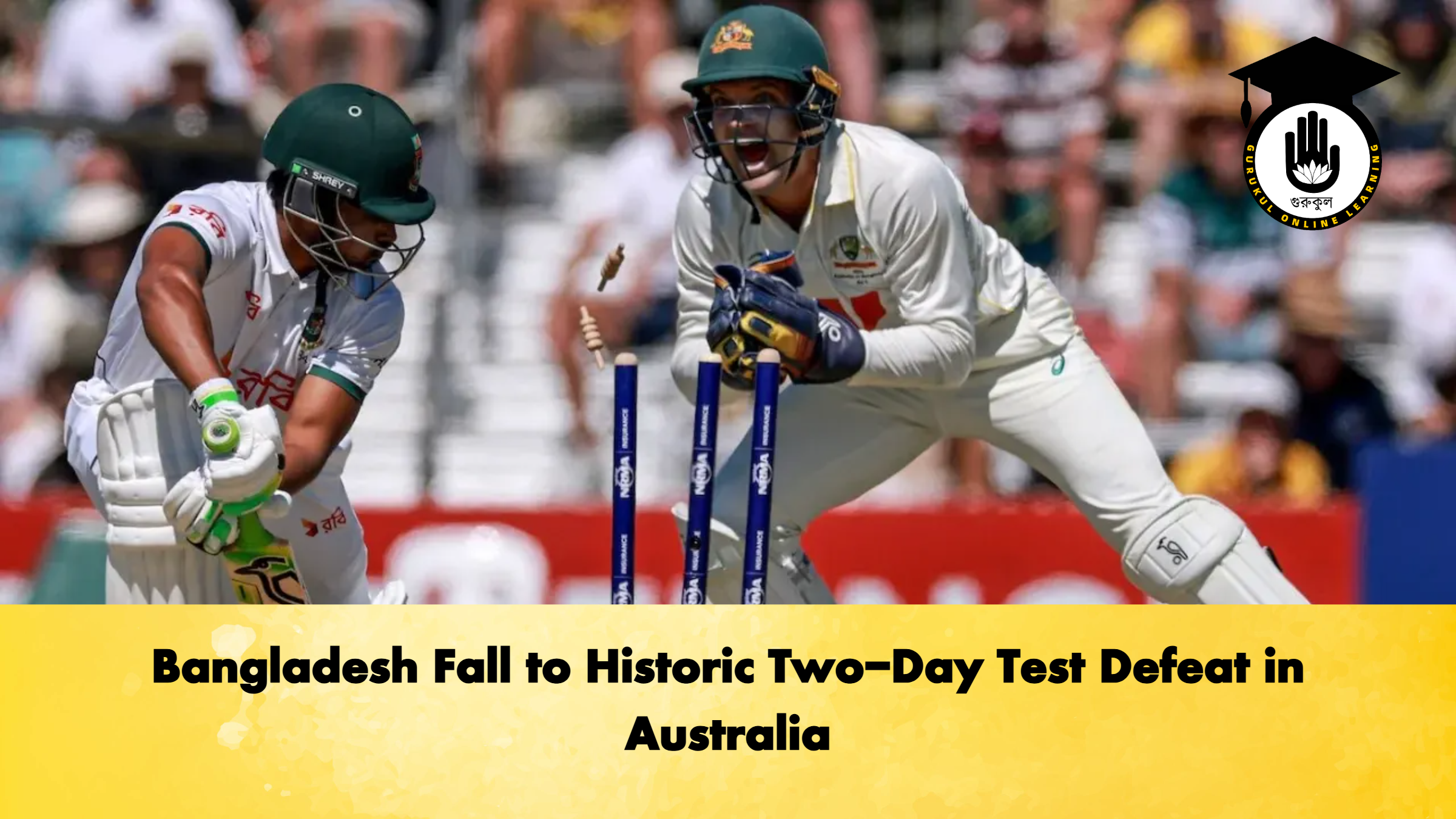
Bangladesh concluded their tour of Australia with a sobering reality check in Mackay, suffering a comprehensive defeat by an innings and 51 runs to draw the series 1-1.
The reversal marked a stark contrast to the optimism generated just weeks prior. Najmul Hossain Shanto’s side had arrived in Queensland with immense confidence after securing a sensational nine-wicket victory in the opening fixture in Darwin. However, the subsequent contest at the Great Barrier Reef Arena exposed severe vulnerabilities against a relentless pace attack, leaving the tourists etched into the wrong side of cricket history.
A Batting Collapse of Unprecedented Proportions
The tone was set during a dismal first innings where the tourists were bundled out for a meagre 64 runs. Australia responded with 210, establishing a commanding 146-run lead. Hopes of a spirited fightback in the second innings evaporated quickly as the batting order crumbled once more, dismissed for just 95 runs.
Consequently, Bangladesh’s match aggregate stood at a paltry 159 runs across both innings—fewer than Australia managed in their single turn at the crease. This dismal scorecard represents a twenty-six-year low for the national side. Since gaining Test status in 2000, Bangladesh have contested 161 matches, yet this fixture stands alone as the first time the team failed to cross the three-figure mark in either innings of a Test match.
The destruction was spearheaded by Mitchell Starc. The left-arm fast bowler claimed 6 for 12 in the first innings before adding 4 more scalps to finish with match figures of 10 for his fourth career ten-wicket haul. Captain Pat Cummins and Nathan Lyon applied relentless pressure from the opposite end, rendering the visiting batters entirely helpless against the extra bounce and movement through the air.
Silver Linings and Match Statistics
Amid the wreckage, Bangladesh seamer Shoriful Islam carved out a brilliant individual milestone. Returning figures of 7 for 48, he delivered one of the finest bowling displays by a Bangladeshi overseas, restricting the hosts to 210 despite a resilient 67 from Cameron Green.
The fixture also entered the history books for its remarkably brief duration. Spanning just 750 deliveries without completing five full sessions, it stands as the second-shortest Test ever played on Australian soil, trailing only a 1932 encounter in Melbourne. While two-day Tests remain statistical anomalies—with only a few dozen instances recorded since international cricket began in the nineteenth century—the result levels the series at 1-1.
Captain Shanto admitted post-match that the conditions in Mackay posed distinct challenges, emphasizing that mastering elite bowling attacks in such environments requires rigorous preparation, mental fortitude, and long-term adaptation.