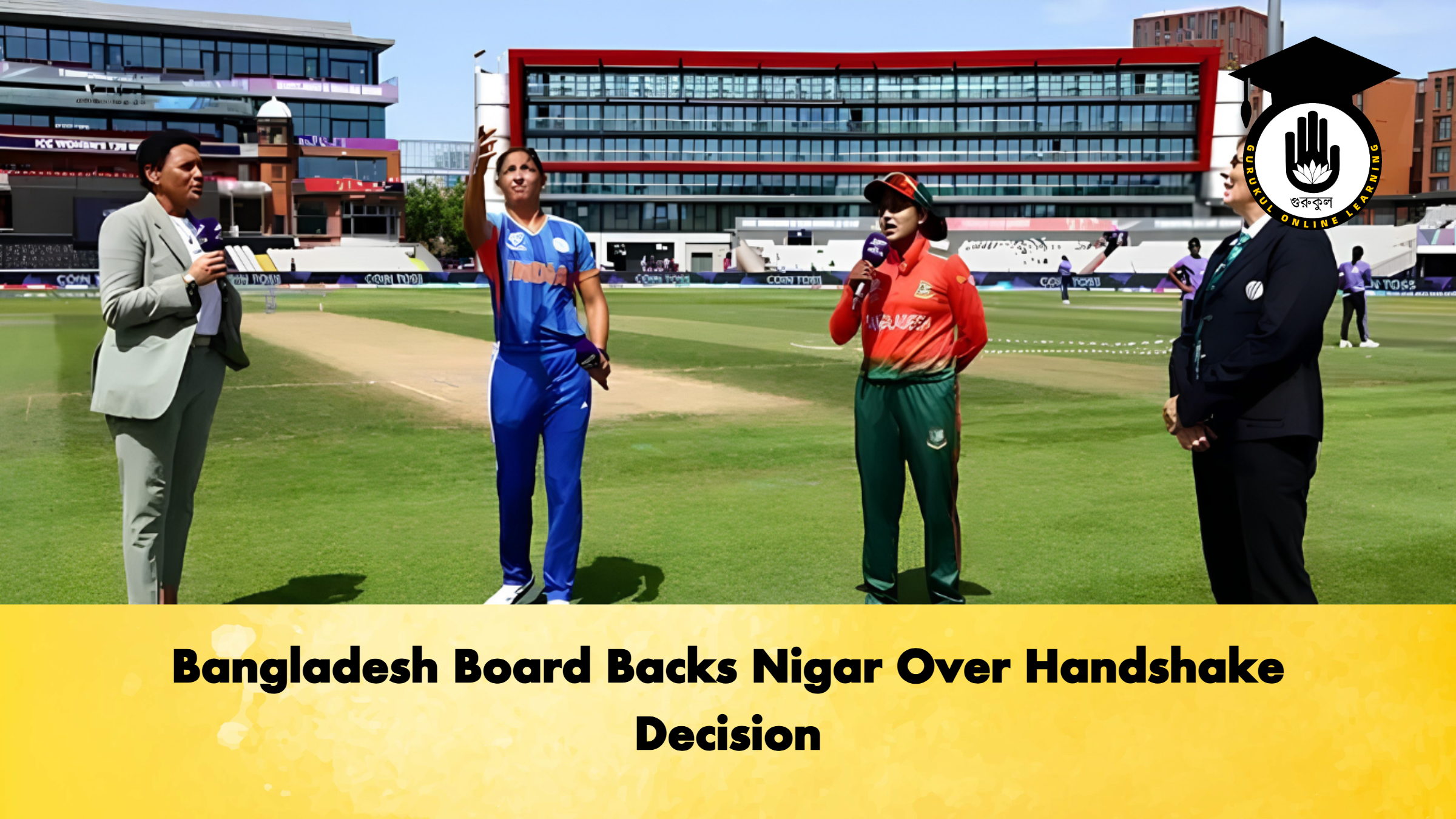
Bangladesh Cricket Board’s women’s wing chairman Rafiqul Islam Babu has backed national captain Nigar Sultana over her decision not to shake hands with India captain Harmanpreet Kaur following their semi-final at the ongoing Asia Cup.
Babu, however, made it clear that the decision was not taken by the board. According to him, Nigar acted on her own and her choice should therefore be viewed as a personal decision rather than an official position adopted by Bangladesh cricket authorities.
“Of course, it was her own decision,” Babu said when asked about Nigar’s refusal to shake hands with Harmanpreet. He stressed that Bangladesh believes sport should bring people together and said the board wants friendly relations with all cricketing nations, not only India.
The incident has nevertheless attracted considerable attention, particularly in Indian media, where it has been portrayed by some as part of a wider pattern of teams declining to exchange handshakes in recent South Asian cricket contests. References have also been made to the India-Pakistan handshake controversy at the 2025 Asia Cup.
The relationship between the Bangladesh and India women’s teams, however, had already become strained well before the latest incident.
The roots of the tension can be traced to the bilateral series between the two sides in 2023. During that series, Harmanpreet publicly raised allegations of biased umpiring. Her criticism became one of the most talked-about aspects of the contest and created an uncomfortable atmosphere around the teams.
The controversy intensified during the presentation ceremony after the series ended in a draw. When both teams appeared on the podium, Harmanpreet made a gesture involving the match officials, which was widely interpreted as a reference to the umpiring decisions during the series. The episode drew criticism and further heightened tensions between the two sides.
Since then, relations between the two women’s teams have remained noticeably cool. The two sides have encountered each other at international and Asian tournaments, but the customary post-match handshake between the captains has not been seen in the same manner.
Against that backdrop, Nigar’s decision in the 2026 Asia Cup semi-final has become the latest flashpoint in an already complicated relationship.
Babu’s comments also underline a distinction between the actions of an individual player and the official stance of the cricket board. While he expressed support for Nigar’s decision, he simultaneously reiterated that the board itself had not instructed the captain to avoid the handshake.
For Bangladesh, the episode therefore carries two separate dimensions. On the field, the teams remain fierce competitors, while off the field their relationship has been shaped by the unresolved fallout from the events of 2023. The latest incident has brought those tensions back into the spotlight.
The board’s stated position is that cricket should remain a means of building friendship and maintaining sporting relations among nations. At the same time, Nigar’s decision demonstrates how strongly past controversies can continue to influence interactions between rival teams, even years after the original dispute.