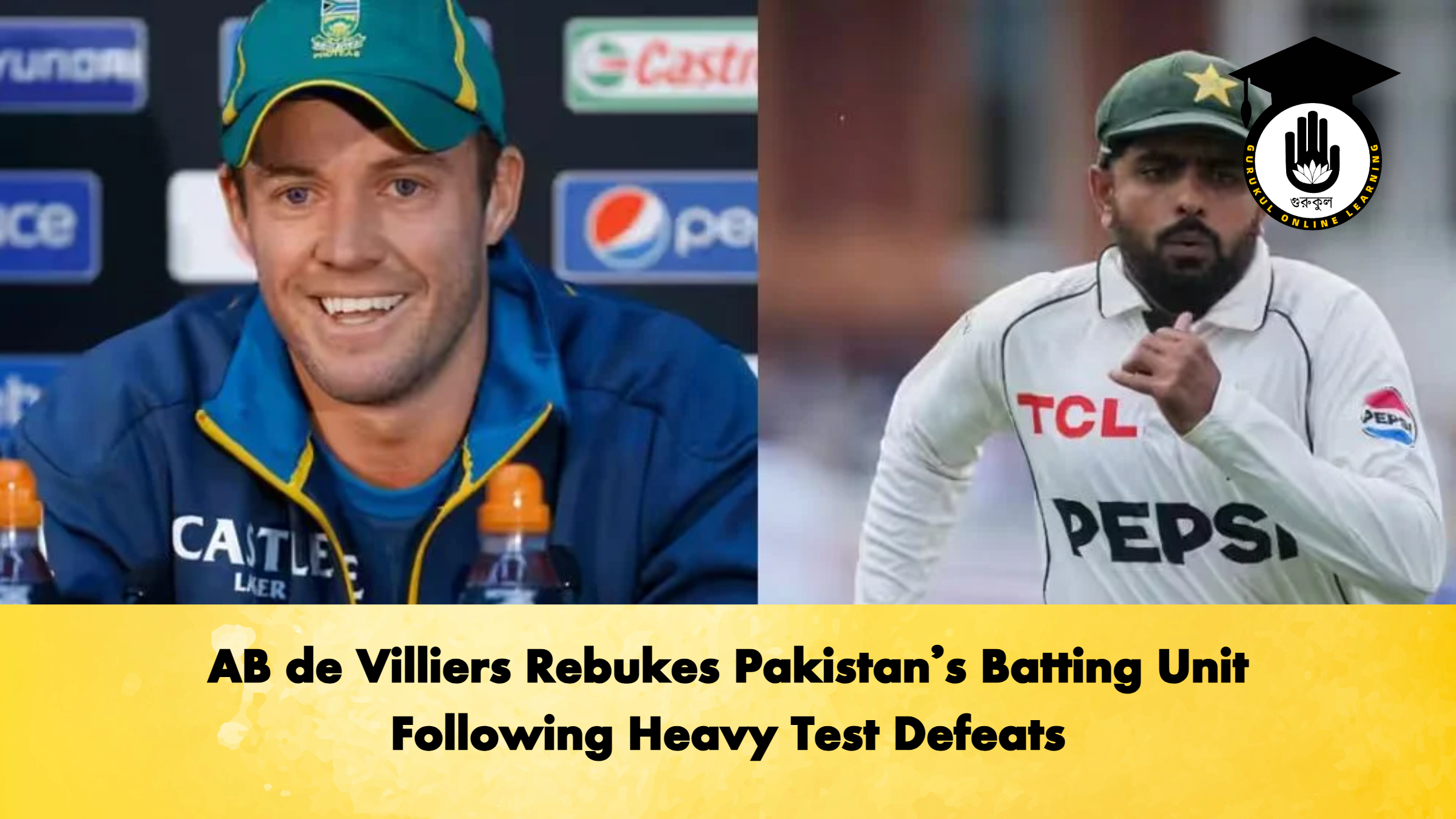
Former South Africa captain AB de Villiers has offered a unflinching assessment of Pakistan’s current cricket crisis, warning that the national side’s woes extend far beyond the administrative turmoil of the Pakistan Cricket Board (PCB). While board decisions remain under intense scrutiny, de Villiers insists that the players themselves must take accountability for a distinct lack of courage, resilience, and battle-readiness on the pitch.
De Villiers’ criticism follows a dismal start to Pakistan’s Test tour of England, where the visitors suffered heavy back-to-back defeats at Headingley and Lord’s. Across four sub-par innings, the batting line-up failed to breach the 200-run mark even once. The opening Test collapsed within three days, while the second dragged into the fourth day primarily due to persistent rain interruptions rather than active resistance from the batsmen.
The fallout from these performances was swift. In a drastic intervention, seven players were dropped and sent home mid-tour, making way for a fresh intake of younger talent. The administrative reshuffle also reached the coaching staff, where Sarfaraz Ahmed was removed from his role as Test coach, with white-ball coach Mike Hesson stepping in to assume red-ball duties.
Analyzing the situation on his YouTube channel, de Villiers argued that the constant structural churn risks masking the squad’s core deficit in character.
“I don’t see that extra effort or grit from a lot of players in Pakistan’s batting lineup,” de Villiers noted. “They simply lack the courage and the fight needed at this level. It is not always about playing pretty cricket. Sometimes it gets ugly, and it might look terrible to watch, but you have to stay out there and keep fighting.”
Reflecting on his own career, the former Proteas skipper emphasized that Test cricket remains the ultimate measure of personal resilience rather than a platform for self-serving metrics. He urged Pakistan’s senior core to stop relying entirely on individual leadership and instead forge a collective standard. In his view, four or five experienced figures must consciously take the reins, setting an immediate example for younger teammates on what is required to win international matches across all three formats.
Despite placing primary responsibility on the playing group, de Villiers acknowledged that the PCB’s entrenched culture of short-term fixes severely hampers progress. Repeated overhauls of the captaincy and coaching structures—highlighted by the recent exits of high-profile coaches Jason Gillespie and Gary Kirsten after internal disagreements—have fostered deep instability.
Addressing Babar Azam’s return to the leadership core, de Villiers expressed hope that the top-order star will finally receive an extended run to establish consistency, provided his teammates step up alongside him to share the burden of leadership.