Bangladesh continued to exert significant pressure on Australia in the Darwin Test, producing an impressive all-round display with both bat and ball. The visitors have steadily tightened their grip on the contest, particularly through disciplined bowling that has repeatedly troubled the Australian batting line-up. Yet at crucial moments, the hosts have enjoyed remarkable slices of fortune, allowing key batters to survive when Bangladesh appeared certain to have them dismissed.
On Saturday, 15 August, Bangladesh made further inroads into Australia’s second innings by claiming three early wickets. The new ball was used effectively, while the bowlers maintained consistent lines and lengths to keep the Australian batters under pressure. Amid that difficult period for the hosts, Cameron Green came within inches of losing his wicket in extraordinary circumstances.
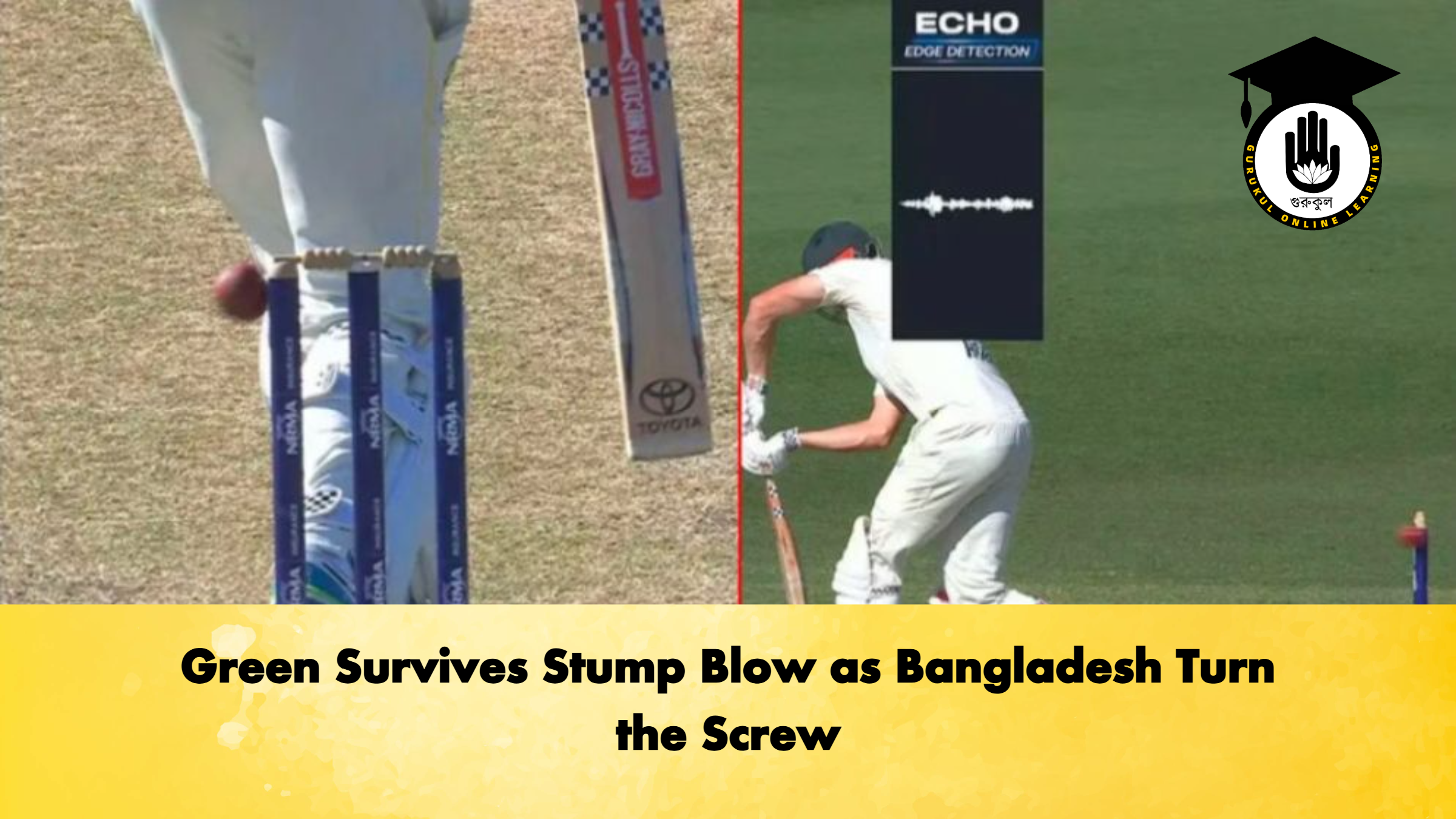
The incident occurred during the 31st over, bowled by Taskin Ahmed. A delivery from the Bangladesh seamer took the edge of Green’s bat and then travelled directly into the stumps. For a moment, it appeared that Bangladesh had produced another important breakthrough. However, despite the ball striking the leg stump, neither bail was dislodged.
Television replays confirmed that the ball had indeed made contact with the wicket. Under the Laws of Cricket, however, merely touching the stumps does not automatically constitute a dismissal. In a bowled dismissal, the wicket must be put down, which generally requires at least one bail to be completely removed from the top of the stumps, or the appropriate part of the stumps themselves to be displaced. As that requirement was not fulfilled, Green was legally entitled to remain at the crease.
The bizarre moment prompted plenty of amusement in the commentary box. Former Australia international Alyssa Healy joked about whether Travis Head had left the bails stuck in place with glue. The unusual sequence quickly became one of the most memorable moments of the match.
Green was not the only Australian batter to benefit from fortune during the Test. Steven Smith had also survived a contentious moment in Australia’s first innings involving Bangladesh seamer Ebadot Hossain.
Ebadot’s delivery appeared to make contact with Smith’s bat before carrying through to wicketkeeper Litton Das. Bangladesh appealed for a catch, but on-field umpire Kumar Dharmasena did not raise his finger. Bangladesh opted for a review, hoping technology would overturn the decision. However, UltraEdge failed to provide sufficiently clear evidence of contact between bat and ball, meaning there was not enough evidence to overturn the original decision.
The incident became even more intriguing after Smith later acknowledged that he had felt the ball make contact with his bat. His admission added another layer to an already contentious episode and highlighted the fine margins involved in modern Test cricket.
Taken together, the two incidents illustrate how unpredictable the game can be. One Australian batter survived because technology could not conclusively establish an edge, while another remained at the crease after the ball struck the stumps but failed to dislodge the bails.
For Bangladesh, such moments are particularly frustrating because their bowlers have been doing much of the hard work required to create pressure. A wicket at the right moment can dramatically alter the course of a Test, especially when a batting side is already struggling to establish a partnership.
The challenge for Bangladesh now is to ensure that pressure is converted into wickets. Creating chances is only part of the task; in Test cricket, the decisive difference often lies in taking those opportunities. With the match progressing, Australia’s ability to withstand sustained pressure and Bangladesh’s capacity to finish off important partnerships could prove crucial to the final outcome.