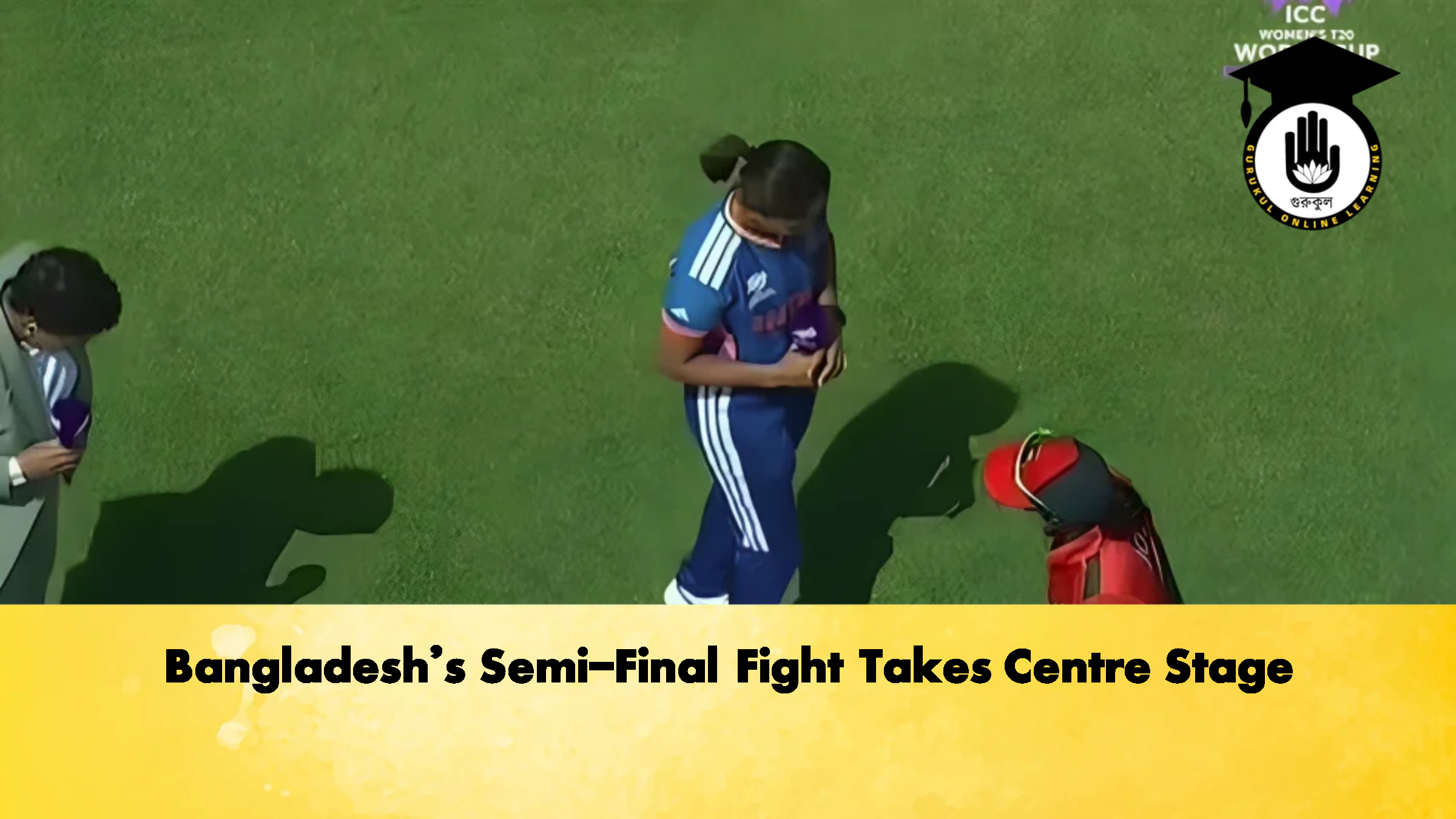
A brief moment at the toss attracted considerable attention before Bangladesh’s crucial Women’s T20 World Cup clash against India in Manchester, as captains Nigar Sultana Joty and Harmanpreet Kaur did not exchange the customary pre-match handshake.
The incident immediately sparked discussion among cricket followers, particularly because it mirrored a similar episode earlier this year during the ICC Under-19 World Cup in Bulawayo, Zimbabwe. On that occasion, Bangladesh Under-19 captain Jawad Abrar and his Indian counterpart Ayush Mhatre also refrained from shaking hands during the toss ceremony. While neither side has publicly commented on either incident, the repeated occurrence has inevitably drawn interest given the intense sporting rivalry between the two countries.
At the toss in Manchester, Harmanpreet Kaur flipped the coin, with Bangladesh captain Nigar Sultana calling correctly and choosing to bat first. Traditionally, captains exchange a handshake before discussing team selections and match strategy, but television footage showed no such interaction. The moment was brief, yet it quickly became a talking point across cricket circles.
The significance of the match, however, far outweighed any pre-match controversy. Bangladesh entered the contest facing immense pressure as they sought to keep their semi-final ambitions alive. With the group stage entering a decisive phase, every point had become crucial in the race for a place in the last four.
After winning the toss, Bangladesh hoped to set a competitive total but once again struggled to fully capitalise on promising starts. The innings concluded at 136 for eight from 20 overs, leaving India with a target that appeared within reach on a generally favourable batting surface.
Bangladesh’s innings suffered an early setback when opener Dilara Akter was dismissed for just four runs. Indian fast bowler Renuka Singh struck in the second over, reducing Bangladesh to eight for one and immediately placing the batting side under pressure.
A recovery followed through a valuable second-wicket partnership between Juwairiya Ferdous and Sobhana Mostary. The pair added 51 runs from 42 deliveries, providing much-needed stability after the early loss. Their stand proved to be Bangladesh’s highest partnership of the innings and offered hope of a stronger total.
Despite that promising platform, Bangladesh struggled to maintain momentum. Wickets fell at regular intervals, preventing the batters from accelerating during the middle overs. The situation worsened significantly towards the end of the innings when the team lost four wickets for just 14 runs. That collapse curtailed any hopes of pushing beyond the 150-run mark.
Juwairiya Ferdous emerged as Bangladesh’s leading scorer with 33 runs from 31 deliveries, striking five boundaries. Captain Nigar Sultana contributed 32 runs and attempted to anchor the innings, but neither batter was able to convert their start into a match-defining score.
India’s bowlers executed their plans effectively throughout the innings. Left-arm spinner Radha Yadav delivered the most influential spell, taking three wickets for 28 runs from her four overs. Her breakthroughs disrupted Bangladesh’s progress and ensured the scoring rate remained under control.
The match carried major implications for the Group One standings. Prior to the contest, Bangladesh, India and South Africa were all level on four points from three matches. Net run rate, however, separated the three teams and highlighted the fine margins involved in the qualification race.
Australia occupied the top position with eight points and had already strengthened their prospects of reaching the semi-finals. India held second place with a net run rate of +2.511, whilst South Africa were third on -0.546. Bangladesh sat fourth despite having the same number of points, with a net run rate of -0.641.
Pakistan and the Netherlands, meanwhile, remained at the bottom of the table without a single point after three matches. Both sides had already been eliminated from semi-final contention.
With only the top two teams from each group advancing to the knockout stage, Bangladesh’s path forward remained challenging. The team required positive results and potentially an improvement in net run rate to remain competitive in the qualification battle.
While the absence of a handshake generated headlines before the match began, the real story in Manchester centred on Bangladesh’s determination to stay in the tournament. As the race for the semi-finals intensifies, performances on the field will ultimately carry far greater weight than any momentary pre-match gesture.