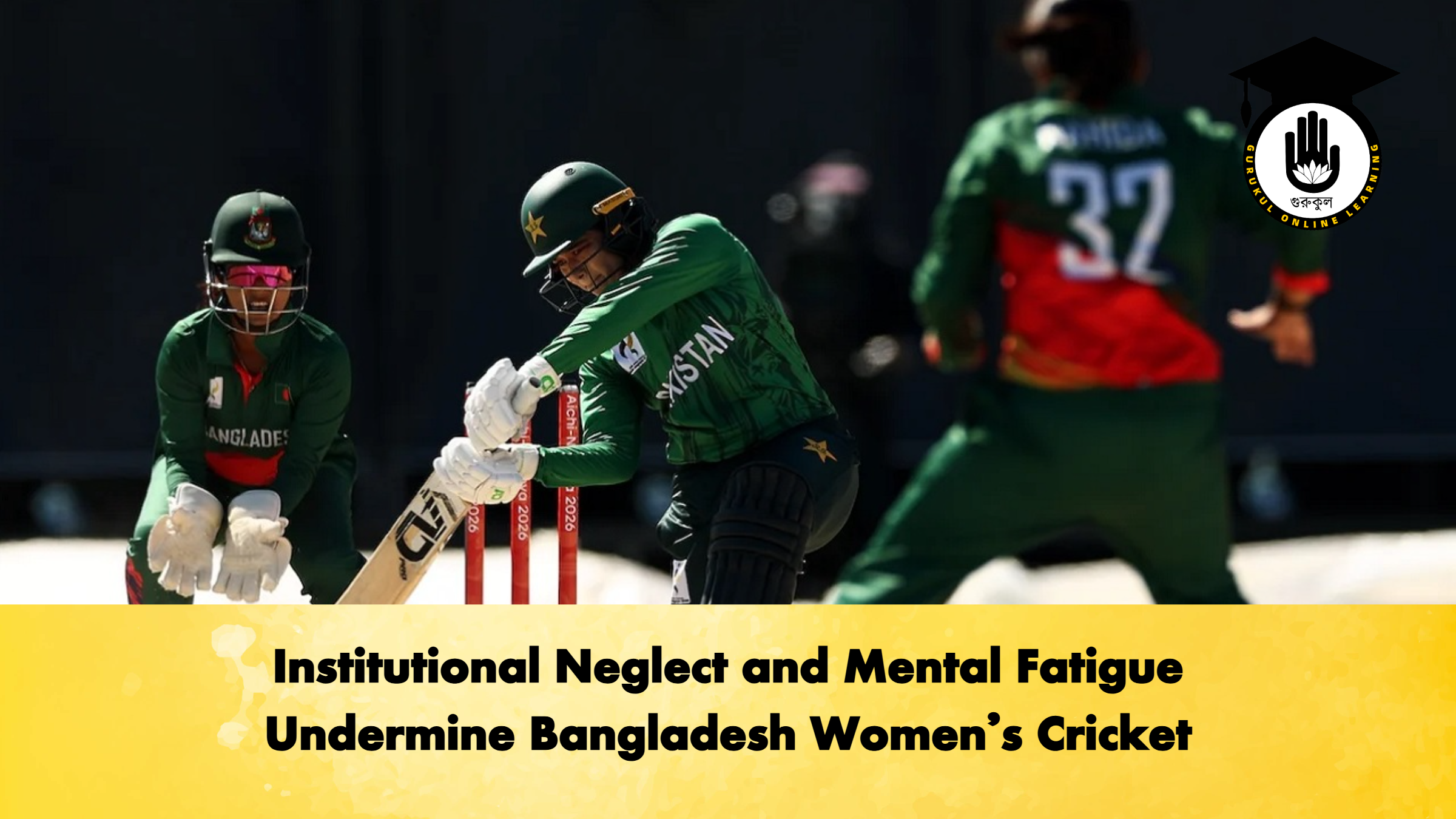
Bangladesh’s women’s cricket team has surrendered its Asian Games podium position following a damaging 31-run defeat to Pakistan in the bronze medal play-off. The loss, which ensured the squad failed to retain the bronze medal secured at the 2023 Hangzhou Games, has exposed severe structural vulnerabilities within the nation’s sporting apparatus. Beyond the immediate disappointment on the field, head coach Sarwar Imran has delivered a scathing assessment of the administrative instability, psychological burdens, and systemic shortcomings currently paralyzing the national setup.
The campaign at the Korogi Sports Park in Nishine, Japan, proved fraught from the outset. Having advanced to the semi-finals purely on a toss rule after their opening fixture against China was washed out without a ball bowled, Bangladesh encountered immediate hardship against elite opposition. India dealt a resounding 114-run defeat in the semi-finals, exposing deep-seated limitations in Bangladesh’s batting order. The bronze medal clash against Pakistan offered an opportunity for redemption, yet the team faltered once again while chasing a modest target of 145, slumping to a dismal 114 for seven in their allotted 20 overs.
Sarwar Imran traces the roots of this current batting crisis back two months to the Women’s Asia Cup. A traumatic failure to finish off a winning position against Sri Lanka severely damaged team confidence, initiating a persistent pattern of low scoring. Even against lower-ranked opposition such as Indonesia and the United Arab Emirates, Bangladesh repeatedly struggled to surpass totals of 120 to 130 runs. That lack of intent was glaringly evident against Pakistan, where a timid powerplay yielded a mere 24 runs, leaving the side needing an improbable 103 runs from the final ten overs.
The inability to clear the boundary ropes highlights a fundamental tactical deficiency in the modern T20 format. However, Sarwar Imran stressed that off-field turbulence has proved equally damaging to squad morale. Captain Nigar Sultana Joty announced her intention to step down from the Twenty20 leadership shortly before the tournament commenced, creating unwanted friction and uncertainty within the dressing room. Unrelenting public criticism directed at both the head coach and captain further deteriorated squad resilience, leaving the players mentally drained and ill-equipped to handle high-pressure scenarios.
These immediate concerns point to a far greater systemic failure in grassroots development. Unlike rival nations like Sri Lanka, where women’s cricket is embedded across hundreds of schools, Bangladesh lacks an established domestic pipeline. Selectors face an acute shortage of talent, operating with a restricted pool of barely thirty competitive players nationwide. Without urgent investment in inter-school tournaments, structured Under-18 competitions, and dedicated training facilities for female athletes, the national setup will remain trapped in a cycle of stagnation. Immediate recovery demands psychological restoration, but long-term success requires sweeping structural reform.