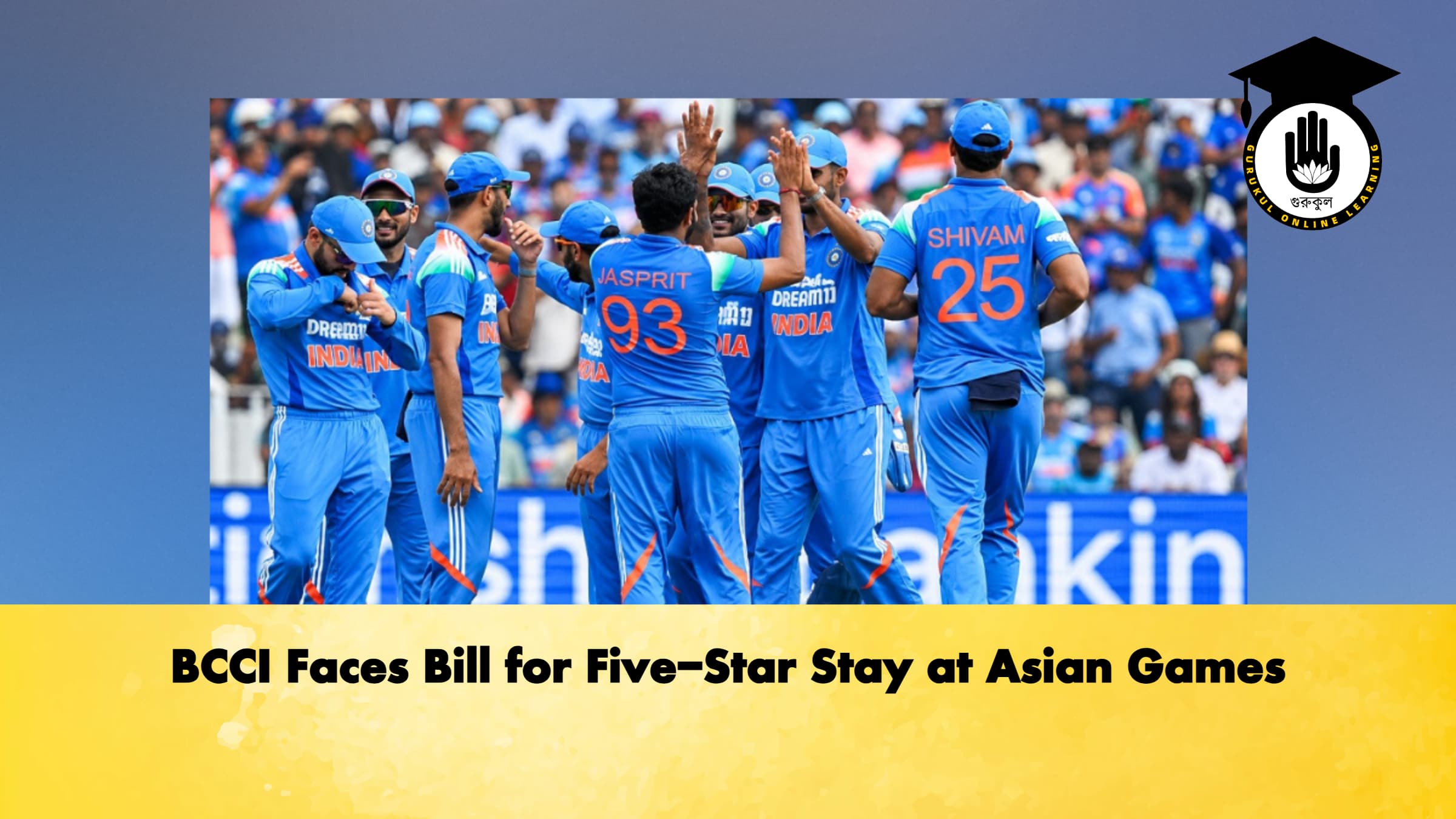
The Board of Control for Cricket in India (BCCI) will have to bear the cost if it wants star cricketers such as Jasprit Bumrah and Vaibhav Suryavanshi to stay in five-star accommodation during the Asian Games in Japan.
The BCCI had sought five-star hotel arrangements for its players, but the Indian Olympic Association (IOA) has declined to provide the cricket contingent with accommodation that differs from the arrangements made for other Indian athletes.
According to a report in The Times of India, the Indian men’s cricket team has been allocated a three-star hotel, while the women’s team will stay in a four-star property during the Games in Aichi-Nagoya. The accommodation plan also involves players sharing rooms, a provision that has reportedly not been well received by the cricket board.
The BCCI is now expected to send a delegation to Japan to inspect the hotels and assess the facilities available to the teams. The board will then decide whether the arrangements provided by the organisers are satisfactory or whether it should make separate arrangements for the cricketers.
The disagreement centres on the principle of equal treatment within India’s Asian Games contingent. IOA chief executive officer Raghuram Iyer said the association does not intend to create a separate accommodation policy for cricket. According to him, the IOA treats athletes, coaches and officials from all sports under the same framework.
The position means that cricket’s status and commercial strength will not, by themselves, result in special accommodation being funded through the common arrangements for the Indian contingent.
The IOA has, however, left the BCCI with an alternative. If the cricket board wants its players to stay in a separate five-star hotel, it can make the arrangements at its own expense. That responsibility would extend beyond hotel rooms. The BCCI would also have to cover the players’ meals and transport and ensure that they reach the venue on time for matches and training commitments.
This arrangement gives the cricket board considerable freedom while keeping the IOA’s accommodation policy unchanged. Rather than preventing the BCCI from choosing a different standard of accommodation altogether, the IOA has made it clear that any additional cost and logistical responsibility must be met by the board itself.
The BCCI’s inspection in Japan is therefore likely to determine the next step. If the delegation finds the allocated hotels and facilities suitable, the teams could remain within the organisers’ arrangements. If the board considers them inadequate for its players’ requirements, it will have to organise and finance an alternative.
For high-profile players such as Bumrah and Suryavanshi, accommodation is also part of the wider preparation surrounding an international multi-sport event. Rest, meals, transportation and timely access to training and competition venues can all affect a team’s daily routine. The BCCI’s decision will therefore depend not only on the category of the hotel but also on the practical facilities available to the players.
For now, the IOA has maintained its policy of treating India’s sporting contingent on an equal footing, while allowing the BCCI to make separate arrangements if it is prepared to meet the associated costs. The final decision will come after the board’s representatives inspect the facilities in Aichi-Nagoya.