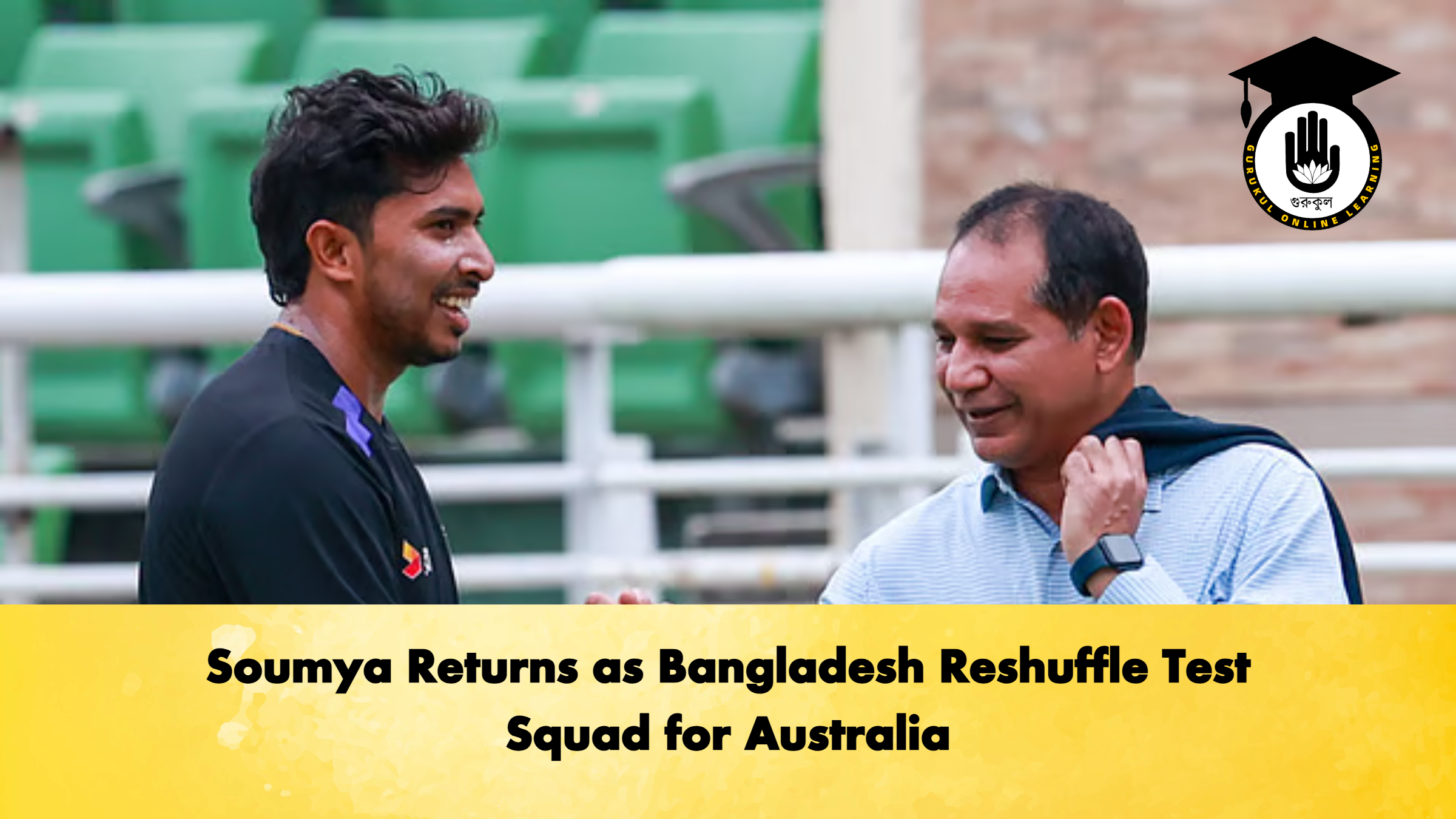
Bangladesh have made several significant changes to their Test squad ahead of the two-match series against Australia, with injuries to key players forcing the selectors to rethink their plans. At the same time, the selection process has taken into account Bangladesh A’s upcoming four-day matches against South Africa Emerging, allowing several players outside the Australia squad to continue developing through competitive red-ball cricket.
Speaking at a press conference after the squad announcement, chief selector Habibul Bashar acknowledged that injuries had made the selection process more complicated than usual. The selectors, however, were not focused solely on the immediate challenge in Australia. They also considered the broader development of Bangladesh’s Test squad and the need to keep promising players match-ready.
As part of that approach, Tawhid Hridoy, Mahmudul Hasan and Mahidul Islam have been left out of the Australia-bound squad but are set to feature for Bangladesh A against South Africa Emerging in a pair of four-day matches. The intention is to ensure that the players continue to gain valuable experience in the longer format rather than remain on the sidelines.
The biggest talking point from the squad announcement, however, has been the change at the top of the batting order. Mahmudul Hasan Joy has been dropped, while Soumya Sarkar has earned a Test recall after an absence of almost five years.
Soumya, a left-handed opening batter, last played Test cricket against the West Indies in 2021. Since then, he has spent a prolonged period away from Bangladesh’s Test set-up, although his performances in domestic first-class cricket have kept him in contention.
His form in the most recent National Cricket League season proved particularly influential. Soumya scored 633 runs in seven matches at an average of 45.21, finishing as the competition’s leading run-scorer. His ability to produce runs consistently in the longer format has strengthened the case for his return, while his considerable international experience is another factor that could prove valuable in Australia’s demanding conditions.
Bashar indicated that Soumya’s experience could be important given the challenges Bangladesh’s batters are likely to face. Australian pitches traditionally offer pace and bounce, while the new ball can also move through the air and off the surface. Batters must therefore combine sound technique with patience, particularly during the opening stages of an innings. Having played extensively at international level, Soumya is viewed as someone who may be better equipped to handle such conditions than a less experienced alternative.
Joy’s recent form, meanwhile, appears to have contributed to his omission. He has been dismissed for single-figure scores in four of his last six Test innings and managed only one half-century during that period. With Australia’s conditions presenting an even greater challenge, the selectors have opted to give him time to regain confidence and rhythm rather than take him directly into a difficult overseas series. The possibility of limited opportunities in the playing XI may also have influenced the decision.
There has also been a change in the middle order. Tawhid Hridoy made his Test debut in Bangladesh’s one-off match against Zimbabwe last month, but the occasion did not produce the performance he would have hoped for. In a match Bangladesh lost by an innings, Hridoy scored 2 and 9 in his two innings.
His omission from the Australia squad, however, does not appear to signal the end of his Test prospects. Instead, the selectors have chosen to send him to South Africa with the A team, giving him an opportunity to play another four-day match and work on his red-ball skills. With Mehidy Hasan Miraz returning to the senior squad, Hridoy’s chances of securing a place in the playing XI against Australia may also have been reduced. Regular competitive cricket is therefore considered a more productive route for his development.
Mahidul Islam has been placed in a similar position. The wicketkeeper-batter was included in the Test squad against Zimbabwe but did not make the playing XI, and he has also missed out on selection for the Australia tour. His inclusion in the Bangladesh A side means he will have the chance to gain further experience in four-day cricket, strengthening both his batting and wicketkeeping credentials.
Jaker Ali, meanwhile, will take responsibility behind the stumps in Australia. The wicketkeeper-batter last played a Test in June last year and now returns after a lengthy period away from the national side. During that time, he was involved in matches under the High Performance programme, where he had the opportunity to maintain his competitive preparation. His performances and progress during that period have helped earn him another opportunity at Test level.
For Bangladesh, the Australia tour represents a formidable test. The combination of pace, bounce and unfamiliar conditions can expose technical weaknesses, particularly against the new ball. Success will require disciplined shot selection, patience and the ability to build long partnerships. Bangladesh’s decision to recall Soumya reflects an attempt to bring greater experience into an area where early wickets could have a major impact on the outcome of the series.
At the same time, the selectors have avoided abandoning players who remain part of the team’s longer-term plans. Instead of allowing Joy, Hridoy and Mahidul to remain inactive, the Bangladesh A programme will provide them with opportunities to play meaningful four-day cricket against a strong emerging side.
Bangladesh will begin the first Test against Australia in Darwin on 13 August, with the second Test scheduled to start in Mackay on 22 August. Meanwhile, Bangladesh A’s first four-day match against South Africa Emerging is due to begin on 16 August, followed by the second match on 23 August.
The selection decisions, therefore, reflect two parallel priorities. Bangladesh are preparing an experienced and competitive group for the immediate challenge of playing Australia in demanding conditions, while also ensuring that players outside the Test squad continue to develop through regular red-ball cricket.
Soumya’s return after nearly five years is the most visible change, but the wider selection strategy may prove just as significant. The decisions involving Joy, Hridoy and Mahidul suggest that Bangladesh’s selectors are attempting to balance short-term competitiveness with the longer-term develop